

Digital business models · EP01
How Do Free Apps Make Money? The Business Behind Free
The app is free. The business still has paying customers—and costs.
Corresponding episode: Why Do Free Apps Make Billions?
Quick Answer
Free apps can be funded by advertisers or users choosing paid features, purchases or subscriptions. The person using the app is not always the person paying; revenue is not profit, and price alone does not establish privacy.
Free to use. Someone still pays.
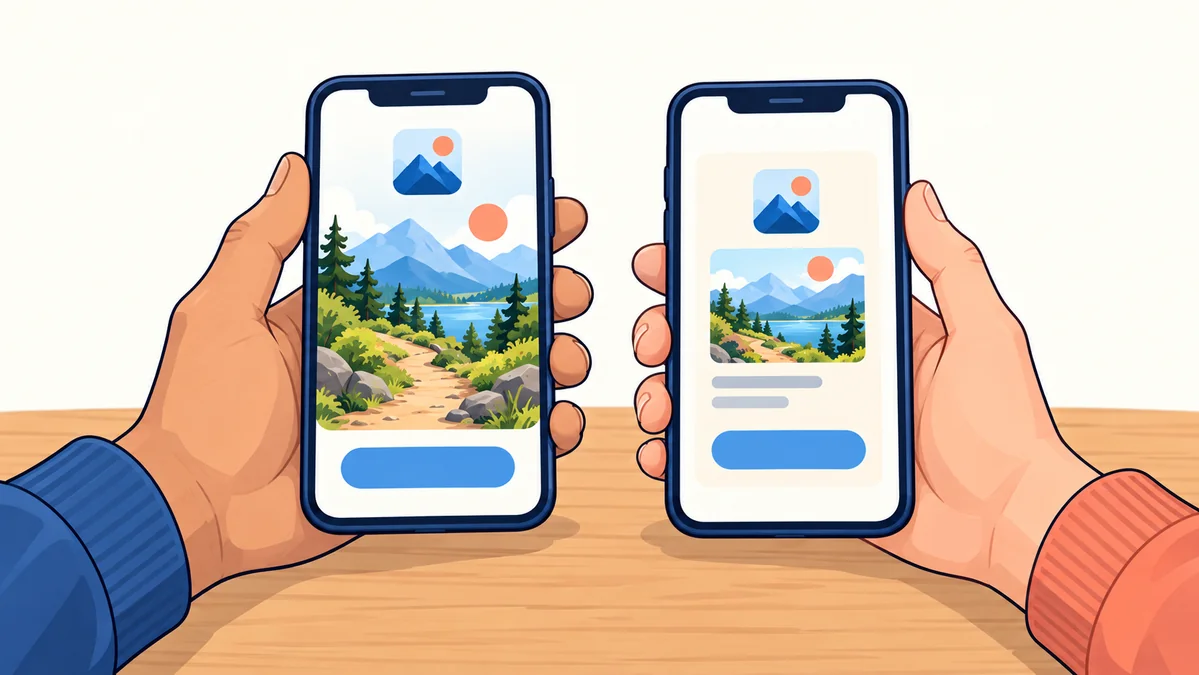
The user and the paying customer can be different people.
The price you pay does not reveal the whole arrangement. Understanding who funds a service helps you assess ads, paid features and privacy separately.
Who pays for “free”?
| Who pays | What they buy |
|---|---|
| An advertiser | Ad placement |
| A user buying credits | A balance that can be used up |
| A user unlocking a feature | A lasting upgrade |
| A subscriber | Access for a period |
One service can combine these offers. Freemium describes free access with optional paid value; in-app purchase describes where you pay.
Money in. Money left.
Money coming in
Remaining before tax
Fictional teaching amounts. A large audience or revenue figure does not establish profit.
Key takeaways

- Follow who pays and what the payment buys.
- Revenue and profit answer different questions.
- A free or paid price does not establish how an app handles data.

Evidence & Limitations
Read the research and its limits
Revenue figures need a denominator
Scale helps explain the headline numbers. Meta reported $196.175 billion in company-wide advertising revenue for 2025, or approximately $196.2 billion. That is a revenue figure across the company, not the profit of one free app. It also does not imply that a small app can expect the same business. Meta’s results
For example, Spotify reported €15.350 billion of Premium revenue and €17.186 billion of total revenue for 2025. Dividing those amounts gives about 89.3% of revenue from Premium. This is a share of revenue, not a claim that 89.3% of people using Spotify were subscribers. Spotify’s annual breakdown
Purchase categories and the free tier
These distinctions follow Apple’s purchase categories. A subscription can itself be purchased inside an app. The place where you pay and the duration of what you buy answer different questions.
Duolingo describes free users as contributing through advertising, recommendations, and product-improvement data in its account of its business model. Treat that as a company’s explanation, rather than evidence that each individual free account generates a profit. Duolingo’s annual report
There is another side to the calculation: serving free users still requires resources. An extra user may bring value, cost, or both. Removing the free tier can change who joins, who stays and who recommends the product. Results depend on the service.
Data use is not the same as a data sale
Google’s privacy policy describes its own information practices. A statement about one provider should not be used to explain every app. In a separate historical example, the FTC alleged improper browsing-data sales involving Avast and Jumpshot, and finalized restrictions in June 2024. The FTC’s case summary concerns that case, rather than all free software.
A contextual ad does not, by itself, establish that a named customer list changed hands. It also does not establish that there is no other tracking. Sharing information requires evidence of a recipient; describing that sharing as a sale requires additional evidence. A paid price does not establish privacy either.
Revenue is not profit
Software maintenance, infrastructure, support, content rights, distribution and payment processing can all matter. A customer’s payment is not necessarily the amount a developer keeps, and there is no single percentage to assume for all apps. Compare the same business, period and cost definition before comparing real figures.
Example assumptions & distinctions
An impression is an ad display; a click is a selection. Billing may depend on impressions, clicks or other terms, with an ad network between advertiser and developer. There is no universal payment for each view.
A subscription may itself be an in-app purchase. Consumable credits, lasting unlocks and renewable access are illustrative categories, not a claim that every app offers all three. For a specific service, examine its collection, purposes, recipients and controls; revenue figures cannot settle privacy questions.
If the paid offer renews, continue with why subscriptions can be hard to cancel or use the cancellation checklist.
Common Misconceptions
Free apps have no paying customers.
Advertisers and people choosing paid value can fund a service even when other users pay nothing.
Revenue tells us profit.
Operating costs still need to be paid; a revenue figure is not a profit figure.
Common questions
Do free apps make money if I never click an ad?
They can. An impression-based arrangement charges for ad displays, while a click-based arrangement charges for clicks. Whether a particular display earns money depends on the advertising terms; there is no universal payment per view.
Is freemium the same as an in-app purchase?
No. Freemium describes an offer with free access and optional paid value. An in-app purchase describes a purchase made inside the app. A freemium app can sell subscriptions, consumable credits, or a lasting feature unlock through in-app purchases.
Does a free app always sell personal data?
No. A free price does not establish a data sale. Examine what the specific service collects, what it uses the information for, and who receives it. Paying for an app does not, by itself, establish privacy either.
Watch the corresponding episode
Why Do Free Apps Make Billions?
The player connects to YouTube only when you choose to load it. YouTube then receives technical request data and this site's origin, and its data processing applies. Privacy information.
Watch directly on YouTube →Follow another question
Why Is It So Hard to Cancel a Subscription?
Why Do We Spend More to Get Free Shipping?

How to Find and Cancel Unused Subscriptions
Editorial notes
Source review date: . Retained evidence and access limitations are identified in the source notes.
About this explanationAdapted from TDQ production scripts and research with AI-assisted drafting. Pip and Nagi's examples are fictional. Website approval: human-approved revision. Prepared . Editorial approach.
Sources & further reading
- Meta — Fourth-quarter and full-year 2025 results
Company-wide annual advertising revenue, reported in millions of US dollars; not the profit of a single app.
- Apple Developer — Overview of In-App Purchase types
Official descriptions of consumables, non-consumables and subscription products.
- Spotify — Q4 2025 shareholder deck
Annual Premium revenue of €15,350 million divided by total revenue of €17,186 million gives approximately 89.3%.
- Duolingo — 2025 Form 10-K
The company's explanation of its free-user and paid-subscription model, not proof that each free user is profitable.
- Google — Privacy Policy
Describes Google's own collection, advertising use and sharing practices; does not represent every app.
- FTC — June 2024 final order concerning Avast and Jumpshot
A historical enforcement case. Allegations and final restrictions should not be generalized to all free services.